Easier administration
Secure patient link, no account, and less manual handling.
Send the PCL-5, auto-score the 20 items (0-80), review item-level symptoms, and keep results on the patient's longitudinal record.
Start with one patient and see how PCL-5 fits into your existing workflow.
For clinicians working with trauma and PTSD. Not a patient self-assessment.
Step 1
A secure patient link.
Step 2
No patient account required.
Step 3
Total score 0-80 and item-level responses for clinical review.
Step 4
Keep administrations on the patient's longitudinal record.
Secure patient link, no account, and less manual handling.
Total score 0-80 from the 20 PCL-5 items, without a spreadsheet.
See item-level responses over time so you can review which symptoms stay elevated.
Keep PCL-5 administrations connected over time on the same patient record.
The PCL-5 is the official 20-item PTSD Checklist for DSM-5, from Weathers and the National Center for PTSD (NCPTSD). Clinicians use it to screen and to monitor change during treatment.
Published studies support its reliability and validity (Blevins et al., 2015; Bovin et al., 2016).
Literature often discusses provisional-screen cutoffs around 31-33. The right threshold varies by population and purpose. Scores support clinical review. The software does not diagnose PTSD.
Totals, item-level symptoms, and change over time stay on the same patient record.
Patient trends
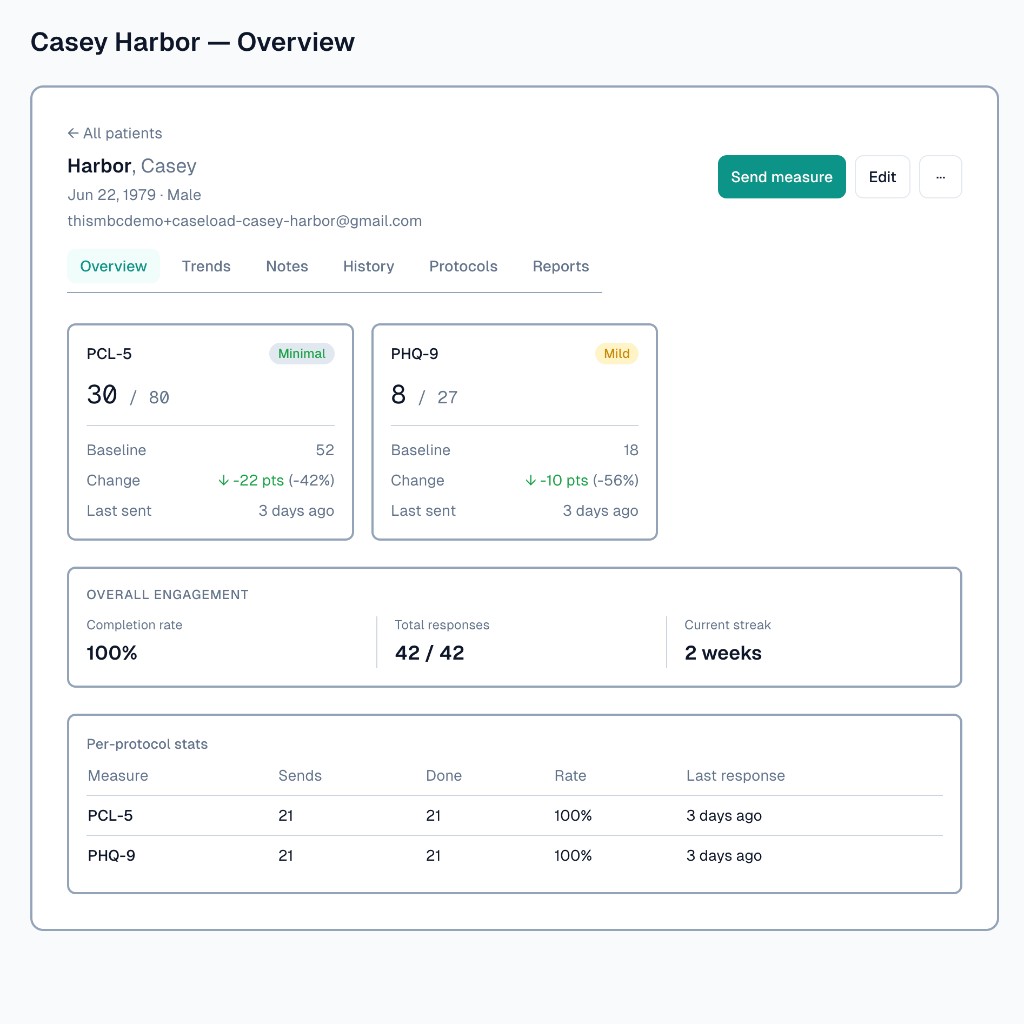
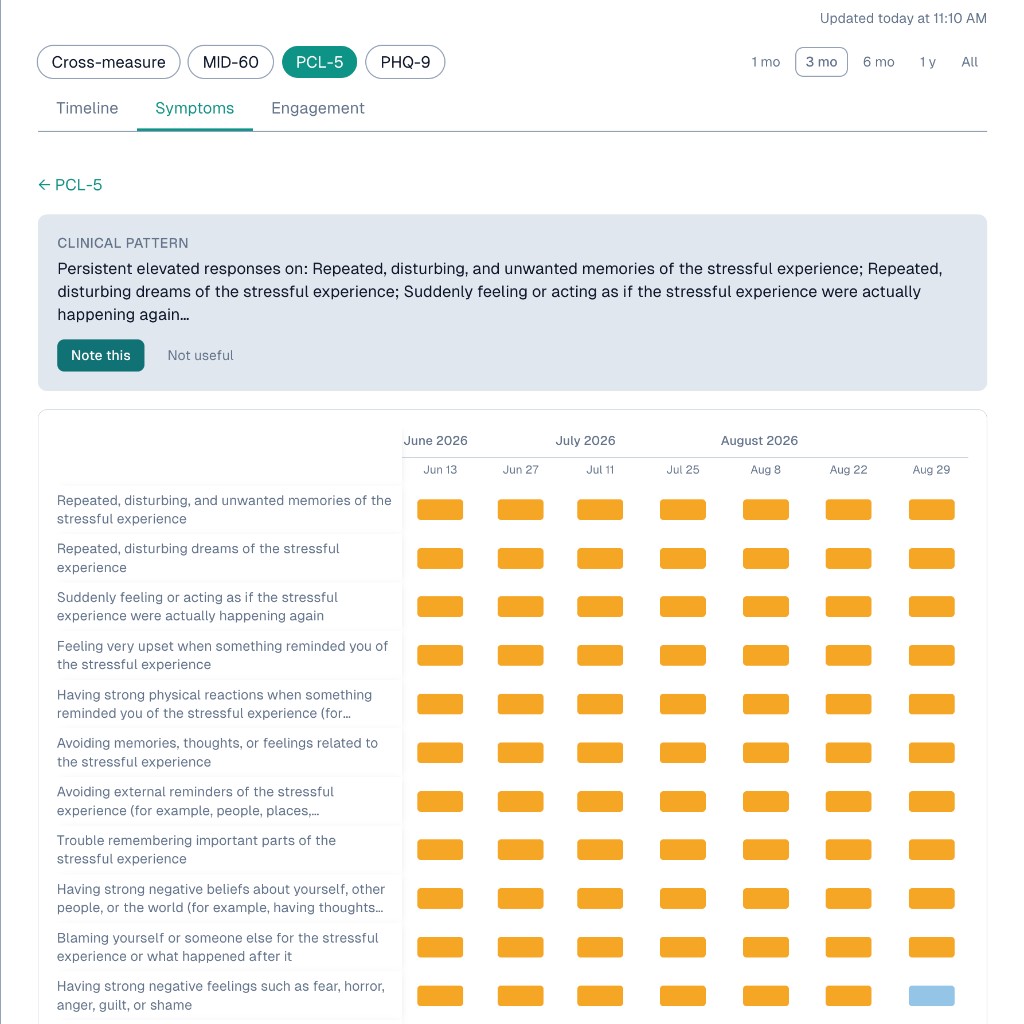
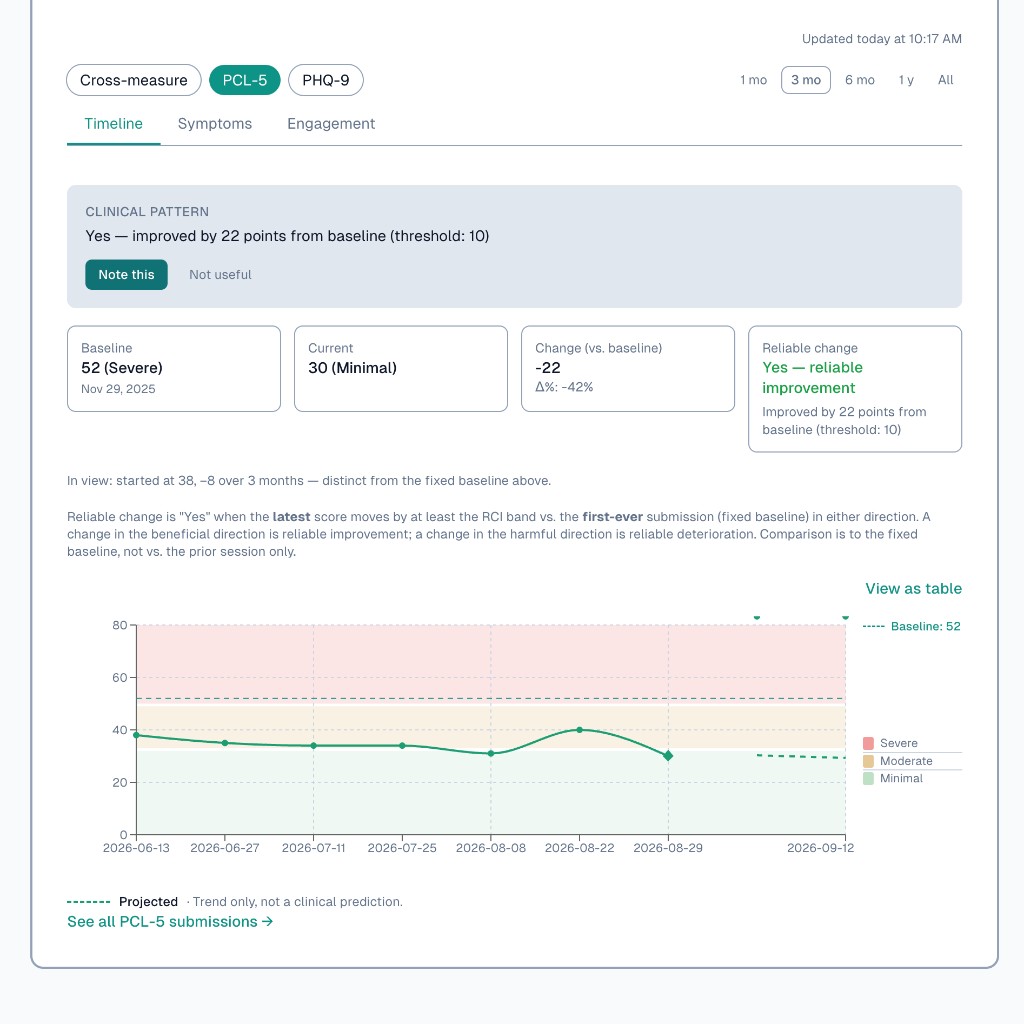
Keep PCL-5 results alongside other measures you already use, with patient-level trends and recurring measurement in one clinical outcomes workflow.
Recurring protocols, patient-level trends, and practice visibility on the same record.
Learn about Measurement-Based CareMBC can send PCL-5 with optional index-event text. Scoring is the same 20 items.
Early access is currently available to mental-health clinicians.
Start with one patient and see how PCL-5 fits into your existing workflow.
Early feedback from clinicians using MBC in practice.
Mental-health clinicians who already use the PCL-5 and want a simpler way to send, score, review, and keep results in the patient record. It is not a patient self-assessment service.